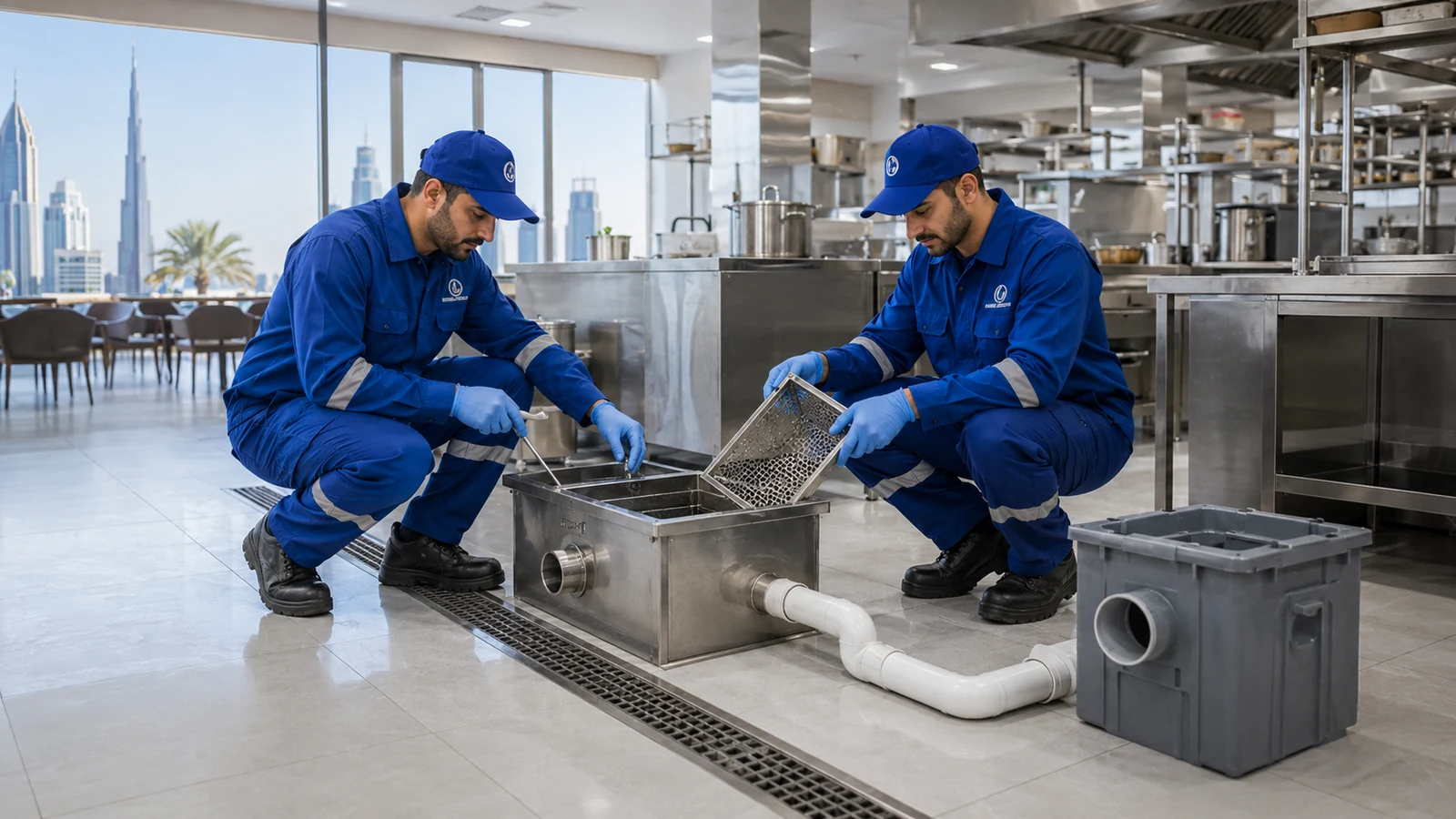
An educational guide for restaurants, cafés, hotels, cloud kitchens and facility teams on grease-trap warning signs, FOG buildup, overflow and equipment condition. BMS supplies, sizes…
In a Dubai commercial kitchen, a grease trap problem rarely starts as a full emergency. It usually begins with slow-draining sinks, bad smells near the trap cover, gurgling drain lines, grease around the lid, or repeated kitchen drain blockages. If these signs are ignored, fats, oils and grease can build up inside the trap and move deeper into the drainage line, creating overflow risk and possible downtime.
Regular grease trap cleaning in Dubai helps restaurants, cafés, hotels, cloud kitchens and food businesses control FOG buildup before it affects hygiene, wastewater flow and daily operations. BMS mainly supports Dubai service requests and can also review selected Ajman, Sharjah and UAE commercial kitchen enquiries depending on site access, route planning and job scope.
Service-area note:
BMS is Dubai-focused for site service, with selected Ajman and Sharjah support. UAE-wide grease trap supply, replacement and project enquiries can be reviewed depending on product availability, delivery location, installation scope and team route.
For full product and service support, see our Grease Trap Supply & Installation Services in UAE.
Why grease trap cleaning matters for Dubai commercial kitchens
A grease trap protects the kitchen drainage system by separating fats, oils, grease and food solids before they travel into the drain line. When wastewater leaves a sink, pot-wash area or floor drain, the grease trap slows the flow so grease can rise and heavier solids can settle. Cleaner wastewater then moves toward the outlet pipe.
In busy Dubai restaurants and commercial kitchens, the system works under heavy load. Frying, pan washing, plate rinsing and floor cleaning can send FOG into the drainage route throughout the day. When the trap is not cleaned on time, the working chamber becomes smaller and less effective. That can create slow drainage, foul odor, higher pipe pressure, grease trap overflow and repeat drain blockages.
Delayed maintenance often costs more than planned cleaning. Emergency callouts, staff downtime, pest-control issues, hygiene complaints, damaged flooring and blocked drain lines can all follow one missed maintenance cycle.

BMS service scope:
This article explains cleaning warning signs. BMS supplies, sizes, installs and replaces grease traps. Routine pumping, emptying and cleaning are not provided by BMS and should be arranged with an appropriate waste-service provider.
10 warning signs your grease trap needs professional attention
These warning signs are common in restaurants, cafés, hotels, cloud kitchens and commercial food-service facilities. One sign may be manageable, but repeated signs usually mean the trap or connected drain line needs professional review.
1
Slow-draining sinks and floor drains
If water stays in the sink longer than normal or pools near floor drains, grease accumulation may be narrowing the flow path inside the trap or drain line.
2
Bad smells near drains or trap cover
A stale, sour or sewage-like odor can mean trapped grease and organic waste are breaking down inside the grease trap chamber.
3
Frequent kitchen drain blockages
If the same sink or floor drain keeps blocking, the issue may be deeper than a surface clog and may require grease trap cleaning plus drain-line review.
4
Grease overflow around the trap
Visible grease near the lid, manhole cover or trap chamber is serious. It can spread contamination and affect the wider kitchen drainage system.
5
More insects, flies or pest activity
Grease waste and food residue can attract pests. This can quickly become a hygiene and reputation concern for food businesses.
6
Gurgling sounds from sinks or pipes
Gurgling usually means trapped air or restricted water flow. It is often an early sign of a partial blockage or overloaded grease trap.
7
Thick grease layer inside the chamber
A visual inspection may show thick FOG, heavy sludge or reduced working space. At that stage, the trap cannot separate waste properly.
8
Wastewater backing up
Backflow into sinks or floor drains is a late warning sign. Immediate action is needed to protect hygiene and stop the issue spreading.
9
No scheduled maintenance for months
A grease trap can look normal from outside while already overloaded inside. Long gaps increase the risk of odor, overflow and blocked drains.
10
Staff or customer hygiene complaints
When staff notice smell, dirty floor areas or slow sinks, the problem is already affecting operations. Customer complaints make it more urgent.
Drain-line warning:
If grease deposits have moved beyond the trap and into the pipeline, professional
Drain Cleaning Services in Dubai
may also be required to restore proper wastewater flow.
Common reasons grease traps become blocked
The biggest cause of blocked grease trap problems is too much cooking oil, fat and fryer waste going into the sink. When staff rinse greasy pans or pour used oil into the drain, the trap fills faster than expected. Food scraps, rice, sauces, meat bits and vegetable residue also collect inside the chamber and reduce working capacity.
Even a correctly sized trap will fail if there is no inspection routine. Poor installation access, incorrect grease trap size, weak slope, wrong inlet/outlet position or difficult lid access can also create recurring problems. If a blockage has moved deeper into the system, our Clean Out Drain Guide explains why access points matter for deeper blockage removal.

How often should a commercial grease trap be cleaned?
There is no single cleaning schedule for every food business. The right interval depends on kitchen volume, menu type, trap size, staff habits, cooking oil usage, washing frequency and inspection findings. Many restaurants and food businesses use a 30 to 90 day cleaning cycle, but high-output sites may need more frequent service.
A small café may need a different plan than a hotel kitchen, cloud kitchen or restaurant with heavy frying. The safest approach is to inspect the trap regularly and adjust the cleaning schedule based on real usage. Preventive grease trap maintenance is usually cheaper and calmer than emergency grease trap cleaning during service hours.
What to do when you notice grease trap warning signs
Kitchen staff should immediately stop pouring oil, sauces or solids into the affected sink. Clear visible debris from sink strainers, reduce water use in the affected area, and check whether the trap cover or nearby floor drain shows signs of overflow. Staff should avoid standing wastewater until the area is safe.
Call trained technicians when the smell becomes strong, water starts backing up, grease appears around the lid, or the same drain keeps blocking. A trained grease-waste or cleaning provider can inspect, empty and clean the trap safely. If the unit is leaking, undersized, damaged or unsuitable, BMS can review supply, replacement and installation options.
Why professional grease trap cleaning is different
Inspection first
The technician checks trap condition, access, lid condition, chamber level, outlet flow and signs of connected drain restriction.
Controlled waste removal
Grease trap waste should be removed responsibly instead of being washed further into the drainage line.
Commercial kitchen focus
The visit should consider operating hours, hygiene, floor safety, odors, staff movement and future cleaning access.
BMS supports restaurants, cafés, hotels, cloud kitchens, contractors and facility teams with grease trap supply, installation and replacement. Routine grease trap cleaning, emptying and pumping should be arranged separately with an appropriate cleaning or waste provider. If grease has moved into the drainage line, BMS Drain Cleaning can assess the downstream blockage.

How to prevent grease trap problems
Staff training makes a major difference. Oil belongs in a separate collection system, not in the sink. Food scraps should be scraped into the bin before washing. Sink strainers should be used consistently, and staff should report slow drainage or odor early.
Planned inspections help facility managers catch grease depth, bad smell, lid leakage, slow drainage and repeated blockage patterns before they become kitchen shutdown issues. For complete kitchen condition support, connect grease trap maintenance with Commercial Kitchen Maintenance Services, Cleaning & Hygiene Services, and Kitchen Hood, Duct & Exhaust Services.

Dubai, Ajman, Sharjah and UAE service context
BMS mainly handles grease-trap supply, sizing, installation and replacement enquiries alongside commercial-kitchen service enquiries across Dubai. Selected Ajman and Sharjah jobs can be reviewed depending on team route, service type, site access and job scope. For grease trap supply, replacement and contractor/project enquiries, wider UAE support can be reviewed based on product availability, delivery location and installation requirement.
Dubai restaurants
Dubai hotels
Cloud kitchens
Commercial kitchens
Ajman enquiries
Sharjah enquiries
UAE supply support
Contractor projects
Related BMS services
Grease trap problems often connect with drain flow, hygiene routines, kitchen equipment access and ventilation maintenance. These BMS pages can help you choose the right service path.
Grease Trap Supply & Installation
Commercial Kitchen Maintenance
Frequently asked questions
Keep your commercial kitchen running smoothly
A grease trap rarely fails all at once. Most problems begin with small warning signs: slow drainage, bad odor, gurgling pipes, repeated blockages or grease near the cover. Early action can protect your drainage, hygiene standards and business continuity.
For restaurants, hotels, cafés, cloud kitchens, contractors and commercial facilities, BMS provides grease trap supply, installation and replacement. If the warning signs point to routine pumping or cleaning, arrange that separately with an appropriate provider; if grease has restricted the downstream drain line, use BMS Drain Cleaning.
WhatsApp BMS
View Supply & Replacement Options
Call
Need a quote or technical guidance?
Share your emirate, property or business type, relevant photos, site access details and preferred timing. BMS will confirm the appropriate next step.
Frequently Asked Questions
How can I tell if my grease trap is full?
Common signs include slow-draining sinks, bad smell from the kitchen drain, gurgling sounds, grease around the lid or trap chamber, pest activity and wastewater backing up into sinks or floor drains.
What happens if a grease trap is not cleaned regularly?
A neglected grease trap can cause grease overflow, bad odor, drain blockage, wastewater backup, pest issues and possible kitchen downtime. The problem can also move into the drain line and require professional drain cleaning.
How often should restaurants in Dubai clean grease traps?
Many food businesses use a 30 to 90 day cleaning cycle, but the right schedule depends on cooking volume, trap size, oil usage, menu type and inspection findings. High-output kitchens may need more frequent service.
Can grease trap problems cause kitchen drain blockages?
Yes. When fats, oils, grease and food solids pass through or overflow from the grease trap, they can restrict kitchen drains, floor drains and sewer lines, causing recurring blockage and bad smell.
Who should handle routine grease-trap cleaning or pumping?
Routine grease-trap cleaning, emptying and pumping should be arranged separately with an appropriate specialist cleaning or waste-service provider. BMS handles grease-trap sizing, supply, installation and replacement, plus separate downstream drain cleaning where required.
What grease-trap work should I contact BMS for?
Contact BMS for grease-trap sizing, supply, installation, replacement and equipment/access guidance. Routine grease-trap pumping, emptying and cleaning are separate specialist waste-service scopes and are not provided by BMS.
What grease trap services does BMS provide?
BMS supplies, installs and replaces grease traps for restaurants, cafés, hotels, cloud kitchens, contractors and facility teams. BMS does not position this service as routine grease trap pumping, emptying or cleaning.